

Need Professional Help with Addiction?
Behavioral Health FAQs
Table of Contents
- Understanding NyQuil: What’s in It and How It Works
- What Is a NyQuil Overdose? What Happens if You Take Too Much?
- How Much Is Too Much? Dosage Thresholds and Risk Factors
- Signs and Symptoms of a NyQuil Overdose
- What to Do if You Suspect a NyQuil Overdose
- Prevention: How to Use NyQuil Safely and Avoid Overdose
- Key Takeaways: Staying Safe With Over-the-Counter Medications
Key Points
- NyQuil contains multiple active ingredients that can cause serious harm when taken in excessive amounts.
- Overdose can occur from taking too much NyQuil alone or combining it with alcohol or other medications containing similar ingredients.
- Symptoms range from drowsiness and confusion to life-threatening complications like liver failure, seizures, and difficulty breathing.
- Liver damage from acetaminophen overdose may not show symptoms immediately, sometimes taking 24 to 48 hours to manifest.
- Emergency medical attention is critical if overdose is suspected. Call 911 or Poison Control at 1-800-222-1222 immediately.
- Prevention includes following dosage instructions carefully, avoiding alcohol, and checking all medications for overlapping ingredients.
When cold and flu season arrives, many of us reach for NyQuil without a second thought. It’s readily available over the counter and seems harmless enough. However, you absolutely can overdose on NyQuil, and the consequences can be far more serious than you might imagine.
If you’ve ever wondered, “What happens if you take too much NyQuil?” you’re not alone. The danger lies in the complex interaction of multiple active ingredients, the potential for mixing with other medications or alcohol, and the delayed onset of serious complications like liver damage [1].
This article will help you understand what’s in NyQuil, how overdose happens, warning signs to watch for, what to do if you suspect an overdose, and how to use this medication safely.
Understanding NyQuil: What’s in It and How It Works
NyQuil is a combination medication containing three primary active ingredients:
Acetaminophen (325-650 mg per dose) serves as a pain reliever and fever reducer. While effective at recommended doses, it’s one of the leading causes of acute liver failure in the United States [2] when taken in excess.
Dextromethorphan (DXM) acts as a cough suppressant. At therapeutic doses, it’s safe and effective. However, excessive amounts can cause hallucinations and dissociation, a disconnection from reality [3], and it has gained notoriety for recreational misuse.
Doxylamine succinate is an antihistamine that causes drowsiness and helps you sleep. Excessive amounts can lead to extreme sedation, confusion, and anticholinergic effects such as severe dry mouth, blurred vision, urinary retention, and irregular heart rhythms associated with toxic overdose [4].
NyQuil formulations vary—some contain alcohol (up to 10%), while others are alcohol-free. There are also liquid gels and specialty versions. Always read your product label.
The presence of multiple active ingredients makes NyQuil both effective and potentially dangerous. When you take too much, you’re dealing with three simultaneous overdoses, each affecting various body systems and overlapping with other medications containing acetaminophen [5].
What Is a NyQuil Overdose? What Happens if You Take Too Much?
An overdose occurs when you consume more than your body can safely process. With NyQuil, this happens through:
- Exceeding the recommended dose by taking too much too soon or doubling up
- “Stacking” medications that contain the same ingredients (like NyQuil plus Tylenol), which is specifically cautioned against by the FDA [5]
- Combining with alcohol, which intensifies sedation and strains the liver
- Intentional misuse for hallucinogenic effects from DXM
Acetaminophen toxicity primarily damages the liver. Here’s what makes it particularly dangerous: you might feel relatively okay for 24 hours with only mild nausea, but silent liver damage is progressing. By the time symptoms like jaundice, confusion, and severe abdominal pain appear, significant injury may have occurred. Without treatment, this can lead to fulminant hepatic failure which progresses to death [1][2].
Dextromethorphan toxicity affects the nervous system, causing confusion, agitation, elevated heart rate, hallucinations, dangerous body temperature increases, seizures, and loss of consciousness [3].
Doxylamine toxicity produces severe drowsiness, confusion, urinary retention, seizures, irregular heart rhythms, and respiratory depression, slow, shallow breathing that can lead to low oxygen or high carbon dioxide levels in the blood that can progress to a coma-like state [4].
How Much Is Too Much? Dosage Thresholds and Risk Factors
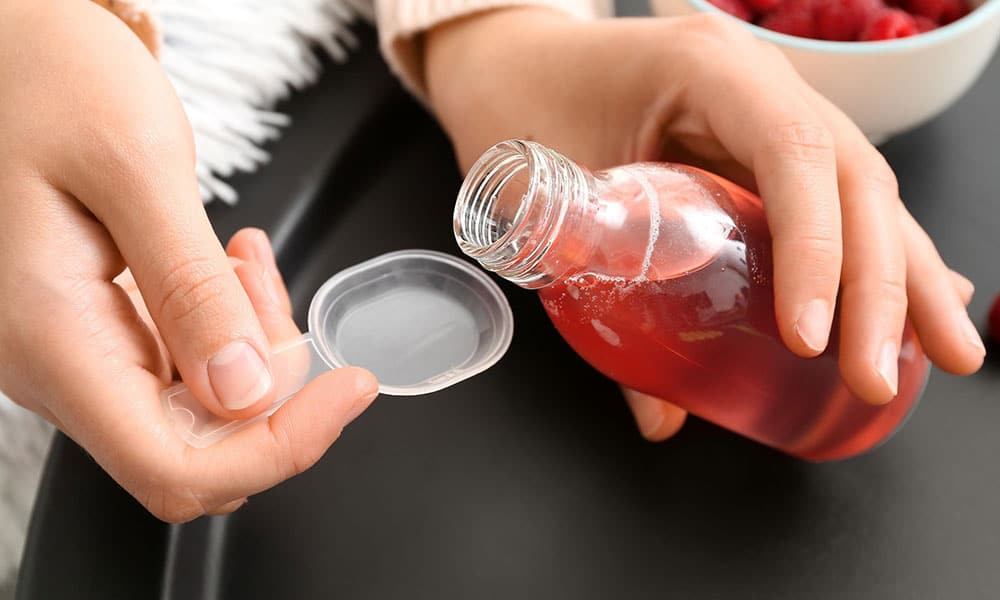
The standard recommended dose for adults is 30 mL (two tablespoons) or two LiquiCaps every six hours, with a maximum of four doses in 24 hours. However, “too much” varies by individual.
For acetaminophen, the maximum daily dose is generally 4,000 mg, though many experts recommend staying under 3,000 mg for safety [5]. Four doses of NyQuil could contain 1,300-2,600 mg of acetaminophen alone; add other acetaminophen products, and you can quickly exceed safe limits.
Risk factors that increase vulnerability to overdose:
- Liver or kidney disease
- Age (children under six should never take NyQuil; elderly are more vulnerable)
- Lower body weight
- Alcohol use (current or chronic)
- Other medications that interact
- Pre-existing respiratory conditions like asthma or COPD
Signs and Symptoms of a NyQuil Overdose
Recognizing symptoms quickly can be life-saving. They range from mild to severe and can evolve over time.
Early Signs:
- Extreme drowsiness beyond normal tiredness
- Confusion and disorientation
- Severe dry mouth making swallowing difficult
- Blurred vision or dilated pupils
- Nausea and vomiting
- Dizziness and clamminess
- Agitation despite extreme drowsiness
Serious and Life-Threatening Signs:
- Slow, shallow, or labored breathing
- Seizures
- Irregular heartbeat
- Loss of consciousness or coma-like state
- Jaundice (yellowing of skin/eyes)—appears later with liver damage
- Dark urine
- Severe upper right abdominal pain
Critical to understand: Liver damage symptoms may not appear for 24-48 hours after acetaminophen overdose. You might feel better initially, but silent injury is still progressing. Early treatment with N-acetylcysteine (NAC) [6] is most effective when given within 8–10 hours of ingestion, well before symptoms appear.
What to Do if You Suspect a NyQuil Overdose
Time is critical. Quick action can prevent serious harm or death.
Immediate Steps:
- Call 911 or Poison Control at 1-800-222-1222 immediately. If the person is unconscious, having trouble breathing or having seizures, call 911 first.
- Gather information:
- How much NyQuil was taken and when?
- What specific product? (check the bottle)
- Other medications or alcohol consumed?
- Person’s age, weight, and medical conditions?
- Stay with the person. Keep them awake if possible. If drowsy, position them on their side to prevent choking.
- Do NOT induce vomiting unless instructed by medical personnel.
Hospital Treatment:
Treatment depends on timing and symptoms:
- Activated charcoal (if within 1-2 hours of ingestion)
- N-acetylcysteine (NAC) for acetaminophen overdose—most effective when given early
- Supportive care: IV fluids, oxygen, seizure control, vital sign monitoring
- Laboratory tests to check acetaminophen levels and organ function
Aftercare:
Follow-up is essential, including liver function monitoring, mental health evaluation if needed, and education to prevent future occurrences.
Prevention: How to Use NyQuil Safely and Avoid Overdose
Follow Dosage Instructions: Use the measuring device that comes with the medication, never household spoons. Set a timer to track when you take each dose to avoid accidental doubling.
Check All Medications for Overlapping Ingredients: Read labels carefully. Many products contain acetaminophen, dextromethorphan, or antihistamines, including pain relievers (Tylenol, Excedrin), cold medicines (TheraFlu, DayQuil), and prescription pain medications (Percocet, Vicodin). Ask your pharmacist to review all your medications and avoid doubling up on acetaminophen [5].
Never Combine With Alcohol: Alcohol intensifies sedation, increases respiratory depression risk, and dramatically strains the liver [2]. If you’ve been drinking, skip the NyQuil.
Keep Medications Secure: Store NyQuil where children cannot access it. Be especially vigilant with teenagers, as some experiment with DXM for hallucinogenic effects [3].
Special Considerations: If you have liver disease, kidney disease, or take multiple medications, consult your doctor before using NyQuil.
A Word About Misuse: If you find yourself using NyQuil when you’re not sick, or taking more than recommended to sleep or escape difficult feelings, these are signs it’s time to reach out for support. Substance misuse often stems from trying to cope with pain, trauma, or stress that feels unbearable. Recognizing this pattern is a brave first step toward getting help that addresses the root causes.
Key Takeaways: Staying Safe With Over-the-Counter Medications
NyQuil is effective for cold and flu symptoms when used correctly, but carries real risks when misused. The combination of acetaminophen, dextromethorphan, and doxylamine means overdose affects multiple body systems, potentially causing liver failure, respiratory depression, seizures, and death [1][2][3].
Remember to always follow dosing instructions, check all medications for overlapping ingredients (especially acetaminophen), never combine with alcohol, know overdose symptoms, act immediately if overdose is suspected by calling 911 or Poison Control (1-800-222-1222), and keep medications secure.
If you or someone you know are struggling with medication misuse, help is available. At The Embers, we understand that substance use is often connected to deeper experiences of trauma, loss, anxiety, or life challenges. Our trauma-informed approach addresses both the substance use and underlying issues in a supportive community environment. Healing is possible, and you don’t have to navigate it alone.
If you have questions about medication safety or concerns about yourself or a loved one, reach out to a healthcare provider. Your health and well-being matter.
Frequently Asked Questions About NyQuil Overdose
Sources
[1] National Institute of Diabetes and Digestive and Kidney Diseases. (2016). Acetaminophen. In LiverTox: Clinical and Research Information on Drug-Induced Liver Injury. National Institutes of Health. https://www.ncbi.nlm.nih.gov/books/NBK548162/
[2] Ostapowicz, G., Fontana, R. J., Schiødt, F. V., Larson, A. M., Davern, T. J., Han, S. H. B., & Lee, W. M. (2002). Results of a prospective study of acute liver failure at 17 tertiary-care centers in the United States. Annals of Internal Medicine, 137(12), 947–954. https://pubmed.ncbi.nlm.nih.gov/12484709/
[3] Hassen, G. W., & Kalantari, H. (2024). Dextromethorphan Toxicity. In StatPearls. StatPearls Publishing. https://www.ncbi.nlm.nih.gov/books/NBK538502/
[4] Kaur, N., & Rai, S. (2023). Doxylamine. In StatPearls. StatPearls Publishing. https://www.ncbi.nlm.nih.gov/books/NBK551646/
[5] U.S. Food and Drug Administration. (2024). Don’t overuse acetaminophen. https://www.fda.gov/consumers/consumer-updates/dont-overuse-acetaminophen
[6] Pannu, A. K., & Zaman, S. (2024). N-Acetylcysteine. In StatPearls. StatPearls Publishing. https://www.ncbi.nlm.nih.gov/books/NBK537183/
[7] Chiew, A. L., Fountain, J. S., Graudins, A., Isbister, G. K., & Buckley, N. A. (2018). Oral and intravenous acetylcysteine for acetaminophen poisoning: A systematic review and meta-analysis. Emergency Medicine Australasia, 30(5), 546–557. https://pmc.ncbi.nlm.nih.gov/articles/PMC3656701/
Embers Recovery Editorial Guidelines
At Embers Recovery, we take your health and wellness seriously. We have a thorough process in place to ensure the integrity of information that is displayed on our website. All content published to our site undergoes a rigorous medical review by a doctorate level clinician to ensure medical accuracy.
Read More About Our Process