



Recent Comments
No comments to show.
Huffing is a type of inhalant abuse that involves the intentional inhalation of chemical vapors from everyday household products to achieve intoxication. Unlike many other substances, the products used for huffing are legal, inexpensive, and found in most homes, making this form of substance abuse particularly concerning and accessible, especially among young people.
Understanding what huffing means is crucial for parents, educators, caregivers, and anyone working with youth. The accessibility of these products, combined with the severe and sometimes fatal health consequences, underscores the need for awareness and education. Many people don’t realize that everyday items like spray paint, cleaning products, and aerosol cans can be misused in ways that lead to immediate danger and long-term harm.
In this guide, we’ll explain the meaning of huffing, describe what paint huffers are, identify everyday household products that are abused, and discuss the serious health risks associated with inhalant abuse.
Huffing is a slang term for the intentional inhalation of volatile chemical vapors to produce a mind-altering or euphoric effect. This practice falls under the broader category of inhalant abuse, which involves breathing in chemical substances that aren’t intended for human consumption. The term “huffing” specifically describes one method of inhalant abuse, though it’s often used more broadly to describe all forms of inhaling intoxicating vapors.
There are several methods people use to inhale these chemical vapors. Huffing typically involves soaking a rag or cloth in a chemical substance and then holding it over the nose and mouth to breathe in the fumes. “Bagging” refers to spraying or pouring the substance into a plastic or paper bag and then inhaling from the bag. “Sniffing” means inhaling vapors directly from containers, while “spraying” involves spraying aerosols directly into the nose or mouth.
Each method delivers volatile chemicals to the lungs, where they’re rapidly absorbed into the bloodstream and carried to the brain. The effects occur within seconds to minutes and typically last only a few minutes, which often leads users to repeatedly inhale to maintain the high, increasing the risk of overdose and sudden death [1].
People who engage in huffing are often seeking a rapid, brief euphoric high that mimics alcohol intoxication or provides an escape from stress, boredom, or emotional pain. The high from inhalants comes on quickly—sometimes within seconds—but it’s also short-lived, usually lasting only a few minutes.
Several factors contribute to huffing, particularly among adolescents and young people [2]. The products used are legal, inexpensive, and readily available in most homes, stores, and workplaces. There’s no need to find a dealer or risk purchasing illegal substances. The misconception that “legal means safe” causes many young people to underestimate the dangers of these chemicals.
Huffing is particularly common among adolescents because household products are easy to obtain without raising suspicion. Young people may experiment with inhalants before trying other drugs, making inhalant abuse sometimes a person’s first experience with substance misuse. Peer pressure and curiosity also play significant roles.
Paint huffers are individuals who specifically inhale paint fumes—including spray paint, paint thinner, or solvent vapors—to get high. This is one of the most recognizable forms of inhalant abuse, and the term “paint huffer” has become somewhat synonymous with inhalant abuse in general.
Paint products contain solvents such as toluene, xylene, and other volatile organic compounds that can produce rapid central nervous system (the brain and spinal cord) depression and euphoria when inhaled. These solvents are particularly potent and fast-acting, which makes paint products attractive to those seeking a quick high. Certain types of paint have exceptionally high solvent content, particularly metallic and specialty spray paints, which are frequently abused.
Various street names and slang terms describe paint huffing and inhalant abuse more broadly. Terms include “huffing,” “sniffing,” “bagging,” “dusting,” and “glading.” Some terms refer to specific products (like “whippets” for nitrous oxide) or methods. Understanding these terms helps parents and educators recognize when young people might be discussing or engaging in inhalant abuse.
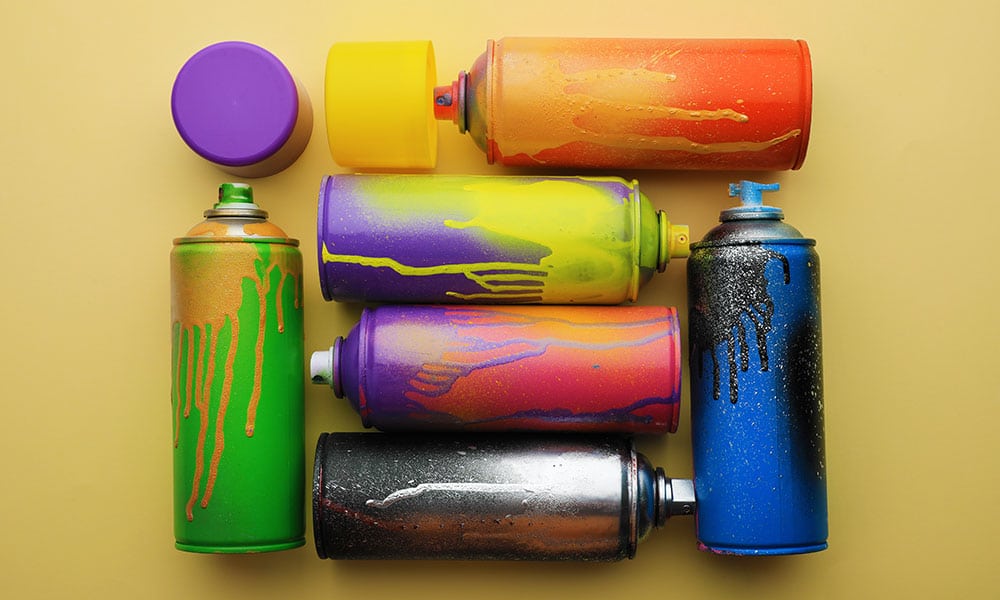
One of the most troubling aspects of inhalant abuse is how many ordinary household items can be misused. Here’s a comprehensive breakdown:
| Product Category | Common Examples | Active Chemicals | Typical Locations |
| Volatile Solvents | Paint thinner, gasoline, model glue, rubber cement, correction fluid | Toluene, benzene, acetone | Garages, craft areas, offices |
| Aerosols | Spray paint, deodorant, hair spray, air freshener, cooking spray | Propellants, solvents | Bathrooms, kitchens, garages |
| Gases | Butane lighters, whipped cream dispensers, computer dusters | Butane, nitrous oxide, difluoroethane | Kitchens, offices, throughout home |
| Cleaning Products | Nail polish remover, dry cleaning fluid, spot removers | Acetone, perchloroethylene | Bathrooms, laundry rooms |
Volatile solvents include paint thinners and removers, solvent-based glues like model glue and rubber cement, gasoline, correction fluid, and felt-tip markers with solvent-based inks. Commonly abused aerosols and sprays include spray paint (particularly metallic varieties), personal care products such as deodorant and hair spray, household aerosols such as air fresheners and cooking sprays, and whipped cream dispensers that contain nitrous oxide [3].
Gases that are abused include butane from cigarette lighters, propane from camping canisters, computer dusters containing difluoroethane, and refrigerant gases. Other common products include nail polish remover, permanent markers, dry-erase markers, and various cleaning fluids and degreasers.
The immediate effects of huffing can include euphoria and intoxication, dizziness and lightheadedness, slurred speech and impaired coordination, distorted perception, hallucinations, nausea and vomiting, and loss of inhibitions. These effects typically last only a few minutes, which often leads to repeated inhalations—dramatically increasing the risk of serious complications [2].
Huffing carries immediate, life-threatening risks that can occur even with first-time use. Sudden Sniffing Death Syndrome can occur when inhalants cause fatal heart rhythm disturbances, leading to cardiac arrest. This can happen during the act of inhaling or immediately afterward, particularly if the person is startled or engages in physical activity. Asphyxiation occurs when inhaled chemicals displace oxygen in the lungs or when plastic bags cause suffocation. Unconsciousness, coma, choking on vomit, and severe injuries from accidents are all serious acute risks.
Cumulative damage to the body and brain results from repeated huffing. Brain damage is one of the most serious long-term effects and can include loss of brain tissue, cognitive impairment (related to knowledge and understanding), memory problems, and difficulty learning [4]. Damage to the myelin sheath protecting nerve fibers can cause permanent neurological problems. Liver and kidney damage, toluene-related hearing loss, bone marrow damage, and mental health conditions (such as depression and anxiety) can also result from long-term inhalant abuse.
Recognizing warning indicators can help identify potential huffing behavior. Some examples of physical warning signs include chemical smells on the person’s breath or clothing, stains on the mouth or nose from paint or other chemicals, red, irritated eyes/nose, sores or a rash around the mouth and/or nose, and a bloody nose.
Some examples of warning signs that you may observe in a person’s behavior are: extreme changes in mood, loss of balance or coordination, and the appearance of being intoxicated by alcohol without having consumed any. You may also notice that someone who is huffing will have poor performance at work or school, secretive behavior, hiding household cleaning products or chemicals, and isolating themselves from family members or friends.
The best way to prevent inhalant abuse is to have open and honest conversations without being judgmental. Having discussions prior to adolescence, before experimentation, will help educate about the real risks that exist when someone uses inhalants or huffer-type products.
You want to be sure to emphasize that someone could die from huffing on the very first time they try it. You want to provide accurate and appropriate information based on the person’s age. Additionally, it is very important to listen to questions and concerns. This helps to set up an environment for the young person to discuss issues related to peer pressure.
If you suspect that someone is huffing, you should seek out the help of a medical professional immediately. If at any time someone is unconscious, has difficulty breathing, experiences chest pain, has a seizure, or otherwise displays signs of severe intoxication (e.g., slurred speech or confusion), seek emergency treatment.
For ongoing support, addiction treatment professionals can assess the situation and recommend appropriate interventions. Addiction treatment programs will provide behavioral therapy to address an individual’s underlying issues related to inhalant abuse, provide medical support to address the physical illness that may result from inhalant use, mental health treatment to address co-occurring mental health conditions, and family therapy to create a supportive and healthy recovery environment [5].
For parents or other individuals who have questions about how to support someone who has or may be huffing, or who is experiencing inhalant abuse themselves, The Embers provides compassionate, evidence-based care in an outpatient setting.
Whether you are a parent concerned about your child who is using inhalants, an educator who is witnessing signs that a student may be using inhalants, or you’re seeking help for yourself, The Embers is here to support you. Taking the first step to seek help, whether it’s for oneself or a family member or loved one, is a sign of strength. Everyone deserves to feel safe, and we encourage you to reach out for help.
[1] National Institute on Drug Abuse. (2023). Inhalants DrugFacts. National Institutes of Health. Retrieved from:
https://nida.nih.gov/research-topics/inhalants. Accessed on September 4, 2026.
[2] Yücel, M., Takagi, M. J., Walterfang, M., & Lubman, D. I. (2008). Toluene misuse and long-term harms: A systematic review of the neuropsychological and neuroimaging literature. Neuroscience & Biobehavioral Reviews, 32(5), 910–926. Retrieved from:
https://www.sciencedirect.com/science/article/pii/S0149763408000389. Accessed on January 26, 2026.
[3] National Institute for Occupational Safety and Health. (2022). NIOSH Pocket Guide to Chemical Hazards. Centers for Disease Control and Prevention. Retrieved from: https://www.cdc.gov/niosh/npg/default.html. Accessed on January 26, 2026.
[4] Filley, C. M., Halliday, W., & Kleinschmidt-DeMasters, B. K. (2004). The effects of toluene on the central nervous system. Journal of Neuropathology & Experimental Neurology, 63(1), 1–12. Retrieved from: https://academic.oup.com/jnen/article-abstract/63/1/1/2916394?redirectedFrom=fulltext&login=false. Accessed on September 3, 2026.
[5] Substance Abuse and Mental Health Services Administration. (n.d.). Advisory: The importance of family therapy in substance use disorder treatment (TIP 39). U.S. Department of Health and Human Services. Retrieved from: https://library.samhsa.gov/product/advisory-importance-family-therapy-substance-use-disorder-based-tip-39/pep20-02-02-016. Accessed on January 26, 2026.
At Embers Recovery, we take your health and wellness seriously. We have a thorough process in place to ensure the integrity of information that is displayed on our website. All content published to our site undergoes a rigorous medical review by a doctorate level clinician to ensure medical accuracy.
Read More About Our Process Is Baclofen a Controlled Substance?
 What Does Laced Mean? Definition, Slang, and Laced Drugs Risks
 Pregabalin vs Gabapentin: Which Is Stronger?